

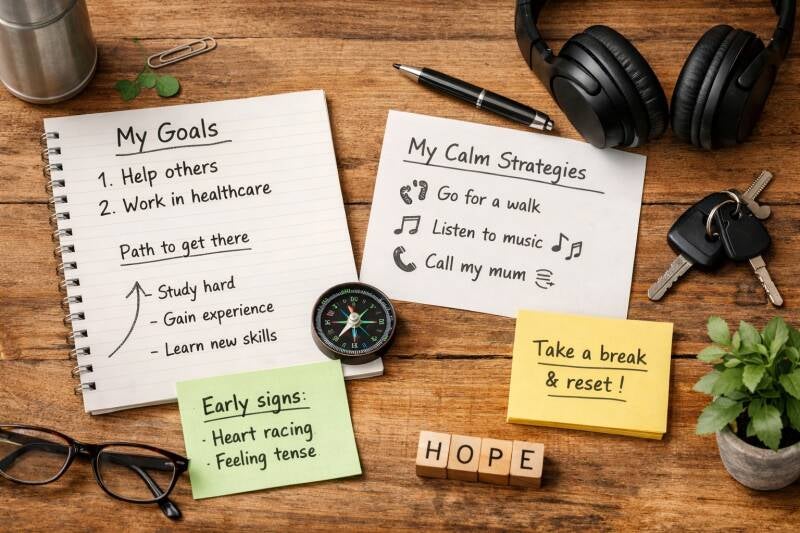
An anonymised example of the kind of support I provide:
I once supported an older child who was refusing all “school” work and experiencing frequent behavioural escalations.
On the surface, it looked like disengagement and non-compliance.
Underneath, it was a child who felt disrespected, spoken down to, and out of control — with very little sense of agency or purpose.
We started by listening.
Together, we identified early body signals that told him he was becoming overwhelmed, and he chose regulation strategies that suited his preferences — things like taking a walk, calling his mum, listening to music, or getting a cold drink of water.
We also added proactive supports to help his body feel ready for learning, including movement before tasks.
As trust built, it became clear that a major barrier to learning was a lack of why.
He couldn’t see a reason to engage, and he had no sense of what learning was leading towards.
We explored interests and values and identified a future pathway that genuinely excited him. Together, we researched what was needed to work towards that goal — and for the first time, he could see himself as capable.
With increased confidence, a sense of purpose, and strategies that respected his autonomy, things shifted quickly.
He began choosing to engage in learning.
His academic progress improved.
Behavioural escalations reduced significantly.
Most importantly, he felt safer, more respected, and more emotionally confident.
This is what can happen when learning moves from compliance to meaning
(Details have been intentionally generalised to protect privacy
Add comment
Comments